Last updated: April 2026 · Jason Parsons
Hotel WiFi: How to Turn Guest WiFi Into a Direct Booking Channel
Every hotel offers free WiFi. Almost none of them get anything back from it.
A guest checks in, connects to your WiFi, stays two nights, checks out. You served them, fed them, made their bed, and left chocolates on their pillow. But when they want a hotel for their next trip, they'll search Booking.com or Expedia, find a property they like, and pay another commission. You'll have no way to remind them you exist.
Your guest WiFi can change that. With a captive portal (the branded splash page guests see when they connect), you can capture an email at the moment of WiFi login and build a marketing list you fully own. The next time that guest needs a hotel, you can be in their inbox before they open an OTA. If you're new to how captive portals work, our pub WiFi guide covers the fundamentals, including hardware setup and GDPR compliance. Everything in this post focuses on what's different for hotels.

The Blue Moon Café
Connect to our free WiFi
By connecting, you agree to our WiFi Usage Policy
What Hotels Do With a WiFi Marketing List
Hotels have some of the strongest use cases for WiFi marketing because the value of a returning guest is so high. A repeat booking that bypasses an OTA can save 15 to 20% in commission. Multiplied across a year, that's real money.
Drive direct re-bookings
This is the headline benefit. A guest who books direct on their second stay saves you the OTA commission on every night they book. If your average commission is 17% and your average booking is £400, you save £68 per direct rebooking. A list of 500 past guests producing even 10 direct rebookings a year is real revenue back in your pocket.
Promote off-season packages
Hotels live and die by occupancy. Your busiest week is full anyway, but your shoulder seasons and midweek nights are the ones that pay the bills. A list of past guests is the perfect audience for a January spa break, a midweek dinner-bed-breakfast offer, or an autumn weekend deal. These are people who already know your hotel and liked it enough to stay.
Capture guests your booking system never sees
Group bookings often record only the lead booker's email. Family rooms might have one email for four people. Corporate bookings often go through travel agents with no guest contact details at all. WiFi captures everyone, because every guest connects, and you build a far richer list than your booking system alone can produce.
Promote on-site spend
Email past guests about your restaurant, your spa packages, late checkout, room upgrades, or your Christmas party menu. The hotel guest who used your restaurant once is more likely to book a table when they're in town than someone who's never visited. WiFi marketing turns one-night stays into longer-term relationships.
Bring back lapsed guests
If a previous guest hasn't stayed in 12 months, they've probably moved on. A "we'd love to see you again" email with a small incentive costs nothing and can recover guests you'd otherwise lose silently. With a hotel's average customer value, recovering even a handful of lapsed guests pays for the system many times over.
Reach non-resident guests
Locals using your bar or restaurant aren't booking rooms, but they're often your best ambassadors. Capturing their email through the WiFi turns them into a marketable audience for events, tasting menus, and special evenings. Many hotels find their non-resident list ends up larger than their guest list.
The Real Cost of Booking Through OTAs
Most hotel operators know OTAs are expensive. Fewer have actually run the numbers on what direct bookings would mean for their bottom line.
If you take a typical 17% commission on a £400 booking, that's £68 going to Booking.com or Expedia per stay. If a guest stays with you twice in two years and both bookings come through an OTA, that's £136 in commission. If you can convert just one of those rebookings to direct, you keep that £68. Multiply across hundreds of past guests over a year, and you're looking at thousands of pounds in recovered margin.
The challenge has always been data. OTAs deliberately hide guest contact details so you can't communicate with them outside the platform. By the time you check the guest in, they've signed a guest registration form, but most hotels don't email those guests directly afterwards because they don't have a clean way to do it consistently across every booking source.
WiFi marketing solves the data problem. Every guest who walks through your door connects to the WiFi. They enter their email at the splash page. That email goes into your dashboard regardless of how the booking originated. Whether they came through Booking.com, your direct site, a corporate travel agent, or a wedding block booking, you end up with the same: a contactable guest record you control.
The next time they want a hotel in your area, you have the chance to reach them before they open an OTA. That's the lever. WiFi marketing doesn't replace OTAs (you still need them for new guest acquisition), but it gives you a way to win the second booking at zero commission.
Real Results: 719 Marketing Opt-Ins in Six Weeks
The Shamrock Social is a hospitality venue in Nottingham that deployed CaptiveFlow from opening night. Every guest who connects to the WiFi sees a branded splash page and enters their email to get online.
Six weeks in:
- 1,804 total guest connections
- 719 marketing opt-ins
- 40% opt-in rate
- 115 returning guests tracked
The same approach works for hotels, with one important difference: each captured email is worth significantly more in the hotel context, because the cost of acquiring that guest through an OTA is so much higher.
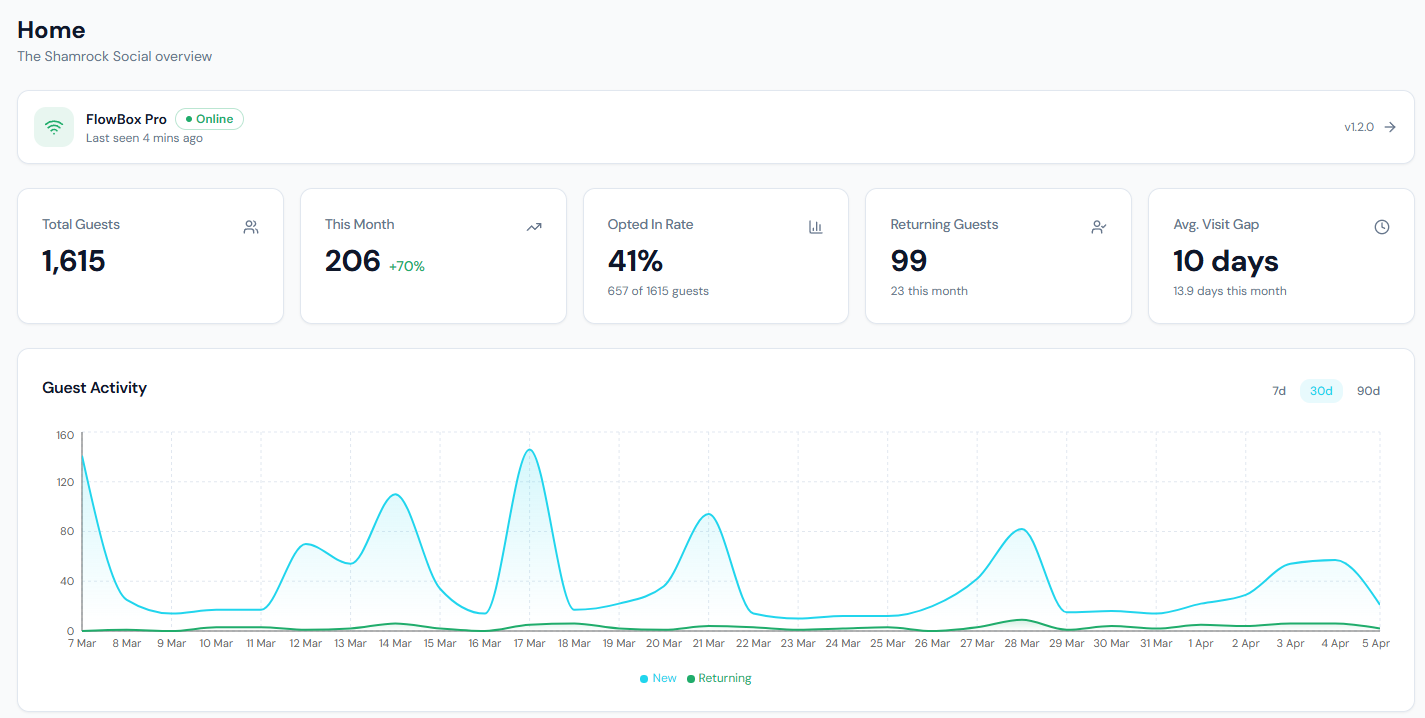
40% of guests actively chose to receive marketing. These aren't scraped emails or purchased lists. They're real people who visited, enjoyed themselves, and want to hear from the venue again.
Getting Started
The setup options and technical details (standalone hardware versus integrating with an existing UniFi or Meraki network) are covered in our pub WiFi guide. The short version: you don't need to replace anything. A captive portal device plugs into your existing setup and handles the splash page, email capture, and analytics.
For multi-zone hotels (lobby WiFi, room WiFi, restaurant WiFi), the system can apply your branded portal across every network so guests get a consistent experience whether they connect at check-in, in their room, or in the bar.
For GDPR compliance guidance, including how marketing consent must be separated from WiFi access, see the GDPR section in the same guide.
If you want to see how it works for your hotel, take a look at how The Shamrock Social did it, or book a demo to see the dashboard for yourself.
Frequently Asked Questions
Read the full guide: Pub WiFi: How to Turn Free Guest WiFi Into a Marketing Channel
Covers captive portal setup, GDPR compliance, and hardware options in detail.
See how CaptiveFlow works for hotels
Ready to reduce OTA dependency and build a direct guest list? See pricing, features, and how the FlowBox integrates with your hotel network.
WiFi Marketing for Hotels